Container Loading and Landed Cost for Mining Excavators in Guinea: Shipping Practice and Cost Breakdown for the 30-Ton Class
Core conclusion: For a 30-ton excavator shipped to Guinea, the equipment FOB price accounts for only about 60% of the total landed cost in Conakry — the loading/lashing method and the destination clearance route are the two most frequently underestimated variables. Whole-machine shipment by breakbulk vessel suits machines that can travel under their own power where the destination port has lifting capability; disassembled shipment by flat rack suits LCL consolidation or oversize-component cases. Guinea has two entirely different duty routes: general construction machinery imports pay 5% customs duty plus 18% VAT, an effective burden of about 24% of CIF value; equipment under a mining project may qualify for a single import duty of 5.6% of FOB value. Choosing the wrong route can widen the cost gap to more than 15% of the equipment price.
1. Shipping Options: The Logic of Whole-Machine, Disassembled, and Flat Rack
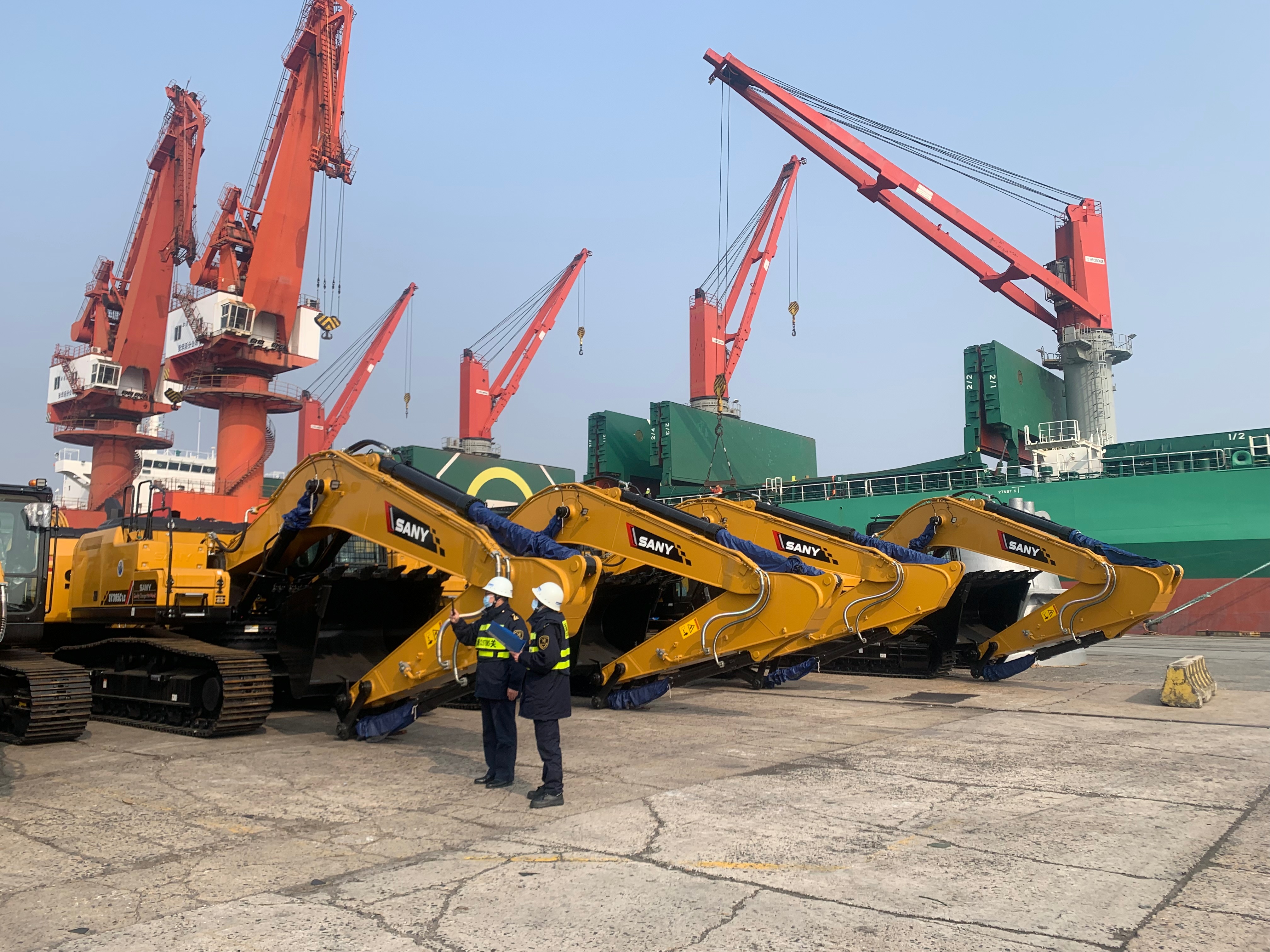
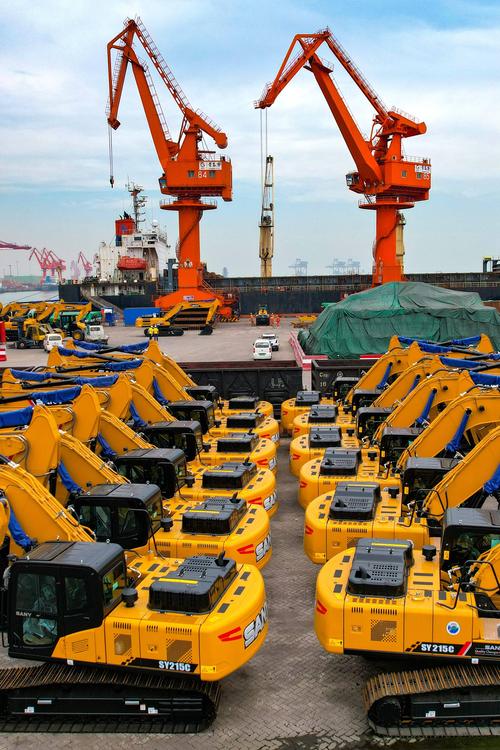
A 30-ton class excavator (e.g., Cat 330D2, Hyundai 305LC-9T) typically has an overall transport width of 3.2–3.5 m, far exceeding the internal width of a 40HQ container (about 2.35 m). Whole-machine shipment in a standard container is therefore impossible. Only three practical options exist: breakbulk whole-machine shipment, flat rack with disassembly, and RoRo.
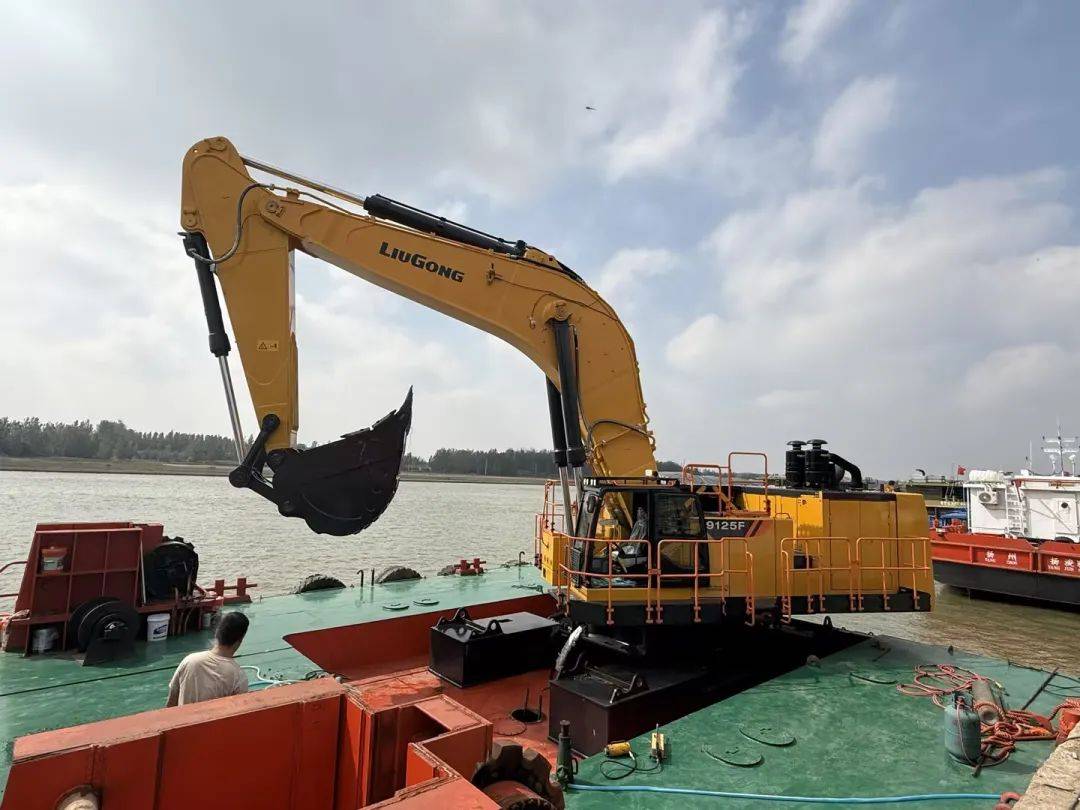
Breakbulk whole-machine shipment suits machines that can drive on and off the vessel where the destination port has heavy-lift or roll-on capability. Conakry has records of breakbulk vessel calls; capacity from Chinese ports to Conakry exists but schedules are less frequent than at major West African hubs. The advantage is no disassembly — the machine can go straight to work on arrival; the disadvantage is low schedule flexibility and greater weather exposure for deck cargo.
Flat rack with disassembly is the more controllable option. A flat rack has no side walls or roof structure, allowing top loading — suitable for oversize-width equipment. A 30-ton excavator requires disassembly of the boom, stick, and counterweight, and if necessary removal of the cab roof to reduce height. In industry practice, flat racks are not "unlimited oversize": the actual acceptable dimensions must be reviewed by the carrier on a per-shipment basis. Before booking, the shipper must provide transport-state weight, post-disassembly length/width/height, and lifting point and center-of-gravity positions.
RoRo places the highest demand on machine condition — it must be able to drive on and off under its own power, and the destination port must have roll-on/roll-off facilities. Conakry has RoRo service records, but route coverage depends on the carrier's current schedule.
Practical recommendation: If the machine is in good condition and the destination receiver has lifting capability, breakbulk whole-machine shipment has the lowest total cost; if the delivery date is tight or LCL cost-sharing is needed, flat rack with disassembly is the more controllable choice. Either way, the contract must specify the disassembly list (boom/stick/counterweight/cab accessories) and require lashing-point photos.
Table 1: Comparison of Shipping Options for a 30-Ton Excavator to Guinea
Shipping Method | Applicable Conditions | Disassembly Requirements | Schedule Flexibility | Main Risks | Machine Condition Requirement |
|---|---|---|---|---|---|
Breakbulk whole machine | Machine can travel under own power; destination has heavy lift | Boom retracted or partially disassembled | Low (few sailings) | Schedule delay; deck lashing affected by weather | High (must drive on/off) |
Flat rack disassembly | LCL consolidation; many oversize components; limited destination lifting | Boom, stick, counterweight disassembled per list | Relatively high | Damage during disassembly/assembly; cargo damage from poor lashing | Medium (reassembly required) |
RoRo | Machine in working order and drivable; destination has RoRo facilities | No disassembly | Depends on route | Destination facility limitations | Highest (must drive perfectly) |
Flat rack (OT/FR) | Oversize width/height single pieces; partial disassembly | Partial disassembly | Medium | Oversize surcharges | Medium |
2. Landed Cost Breakdown: Two Duty Routes Determine the Cost Magnitude
Guinea has two parallel import tax routes, and the choice directly determines landed cost.
Route 1: General construction machinery import. Under Guinea's customs tariff, the most-favored-nation duty on excavators (HS 8429.52) is 5%, and VAT (TVA) is 18%, with VAT calculated on the CIF value plus duty. For a machine with a CIF value of USD 100,000: duty USD 5,000; VAT (105,000 × 18%) = USD 18,900; duty plus VAT totals USD 23,900, or 24% of CIF value. There are also ECOWAS community levy, statistical tax, port handling fees, and agency fees, so the actual total tax burden may exceed 26% of CIF.
Route 2: Equipment under a mining project. Guinea's mining code and mining agreement practice provide that equipment, machinery, and heavy tools used for mining operations qualify for a single import duty of 5.6% of FOB value. The precondition is that the equipment is registered under a mining project, listed on the mining list, approved by the competent authority, and used directly for mining or ore processing. If the buyer is a mining rights holder or holds a formal service contract with a mining company, the 5.6% single rate versus the 24% combined burden represents a gap of roughly 18–20% of CIF value.
Key reminder: The 5.6% rate applies to FOB value, while ordinary duty and VAT apply to CIF value. The tax bases differ, so the actual saving must be calculated against the specific CIF/FOB ratio. Mining exemption eligibility must be confirmed by the buyer with Guinea's Ministry of Mines and Customs before shipment; the seller cannot handle it on the buyer's behalf.
Table 2: Landed Cost Composition for a 30-Ton Used Excavator to Conakry (Example: CIF USD 100,000)
Cost Item | Basis | General Import Route | Mining Project Route | Responsible Party | Notes |
|---|---|---|---|---|---|
Equipment price (FOB) | By condition/year, indicative USD 24,000–38,000 | Approx. 55–65% | Approx. 55–65% | Buyer | Subject to inspection |
Ocean freight | Breakbulk/flat rack, Shanghai–Conakry | Approx. 8–12% | Approx. 8–12% | Buyer | Fluctuates with fuel and schedule |
Insurance | 110% of cargo value, all risks | Approx. 1–1.5% | Approx. 1–1.5% | Buyer | War risk recommended |
Loading & lashing | Disassembly, lifting, lashing materials and labor | Approx. 4–7% | Approx. 4–7% | Seller cooperates | Disassembly plan directly affects this |
Destination port charges | Unloading, storage, lifting, agency | Approx. 4–6% | Approx. 4–6% | Buyer | Confirm with Conakry port |
Customs duty | General 5% CIF / Mining 5.6% FOB | 5% CIF | 5.6% FOB | Buyer | Route choice determines |
VAT | 18% (general route only) | Approx. 18–19% of CIF+duty | 0 | Buyer | Mining route exempts VAT |
Inland transport | Conakry port to mine site | Approx. 5–10% | Approx. 5–10% | Buyer | Varies widely by site distance |
Estimated total tax burden | Approx. 24–26% of CIF | Approx. 5.6% of FOB | Gap is significant |
Data verification date: October 2026. Duty data is based on Guinea's customs tariff (2023 basis, HS 8429.52) and mining agreement practice. Actual implementation is subject to the latest tariff confirmed by the buyer's customs broker with Guinea Customs; mining exemption eligibility must be obtained in writing by the buyer before shipment.
3. Pre-Shipment Inspection and Document Responsibility Boundaries
Video inspection 24 hours before loading is the core checkpoint for controlling cargo-damage disputes. The video must be time-stamped and cover cold start (30 seconds at idle, listening for main pump noise), travel (30 seconds forward and 30 seconds reverse), swing (two full turns each direction), and digging action (full stroke of stick and bucket, twice). Guinea's high humidity makes excessive water in hydraulic oil a common hidden risk; a third-party hydraulic oil sampling (NAS grade test) is recommended, costing about USD 200–400, borne by the buyer or shared.
On documents, the seller provides the commercial invoice, packing list, bill of lading, certificate of origin, and pre-shipment inspection report (if required by the buyer). The buyer is responsible for import clearance, the mining exemption application, and destination charges. The contract must not state "customs clearance guaranteed" or "tax included"; use the unified responsibility wording: "The seller provides export documents and cooperates with pre-shipment inspection; import clearance and destination-country taxes are the responsibility of the buyer or its agent."
Table 3: Pre-Shipment Inspection Items and Document Responsibility
Item | Content | Responsible Party | Timing | Cost Bearer |
|---|---|---|---|---|
Cold-start video | 30 seconds at idle, listening for main pump noise | Seller films; buyer/third party present | 24 hours before loading | Seller |
Travel and swing test | 30 seconds forward/reverse; two full swings each direction | Same as above | Same as above | Seller |
Hydraulic oil sampling | NAS grade or water content test | Buyer commissions SGS/BV | Before loading | Buyer (approx. USD 200–400) |
Disassembly and lashing confirmation | Boom/counterweight/stick disassembly list; lashing-point photos | Seller | Before loading | Seller |
Export documents | Invoice, packing list, B/L, certificate of origin, pre-shipment report | Seller | Before shipment | Seller |
Mining exemption/clearance documents | Mining list approval, import permit | Buyer | Start 30 days before shipment | Buyer |
FAQ
Q: Can a 30-ton excavator be shipped to Conakry without disassembly?
A: The machine is over 3 m wide and cannot enter a 40HQ. However, breakbulk whole-machine shipment or RoRo is possible, provided the machine can drive under its own power and the destination has the corresponding facilities. Disassembly is mainly for flat rack LCL scenarios.
Q: How much does the tax burden differ between general import and mining project import?
A: For CIF USD 100,000, the general route carries 5% duty plus 18% VAT, totaling about USD 23,900 (24% of CIF); the mining route's 5.6% single rate applies to FOB, so if FOB is about USD 60,000, the burden is about USD 3,360. The gap is about USD 20,000, but the mining route requires the buyer to obtain eligibility confirmation in advance.
Q: Who performs the pre-loading video inspection?
A: The seller cooperates in filming, with the buyer or a commissioned third party (SGS, BV, etc.) present. The key is to record a time-stamped sequence of cold start, travel, swing, and digging as written evidence for cargo-damage disputes.
Q: Are breakbulk sailings to Conakry frequent?
A: Less frequent than at major West African hubs. Conakry has records of breakbulk vessel calls, but schedules depend on the carrier's current rotation. Confirm the next two sailings with the freight forwarder before locking in the delivery date.
Q: What cost do Guinea mining buyers most often overlook?
A: Destination port charges and inland transport. Conakry port handling fees and the overland distance to the mine site directly affect the total. A quote covering only CIF Conakry without destination charges and inland leg will leave the buyer paying more than expected.
Data verification date: October 2026. Duty data is based on Guinea's customs tariff (HS 8429.52, 2023 basis) and mining agreement practice. Freight and port charges are reference ranges and must be confirmed against actual sailings and port announcements. Mining exemption eligibility is subject to the latest confirmation by Guinea's Ministry of Mines and Customs.
FairTradeMachinery
Vous concevez la vision. Nous nous occupons des parties difficiles.
Aider les acheteurs mondiaux à accéder à des machines et des solutions après-vente de meilleure valeur.
En tant que principale plateforme mondiale d'échange de machines d'occasion en Chine, nous nous situons à l'intersection de la technologie IoT et du commerce B2B. Cela signifie des données d'inventaire en temps réel, des profils de vendeurs vérifiés et un processus de transaction conçu pour les acheteurs transfrontaliers qui ne peuvent pas toujours inspecter les machines en personne. Nos utilisateurs en Chine ont dépassé 1,5 million, ce qui signifie que nous avons la première source de propriétaires de pelles et le nombre équivalent de machines. Cela signifie que nous pouvons couvrir tous les modèles populaires et même des besoins spécifiques, quel que soit l'état.






 Discussion en direct sur Whatsapp maintenant


 FAQs
 WhatsApp